|
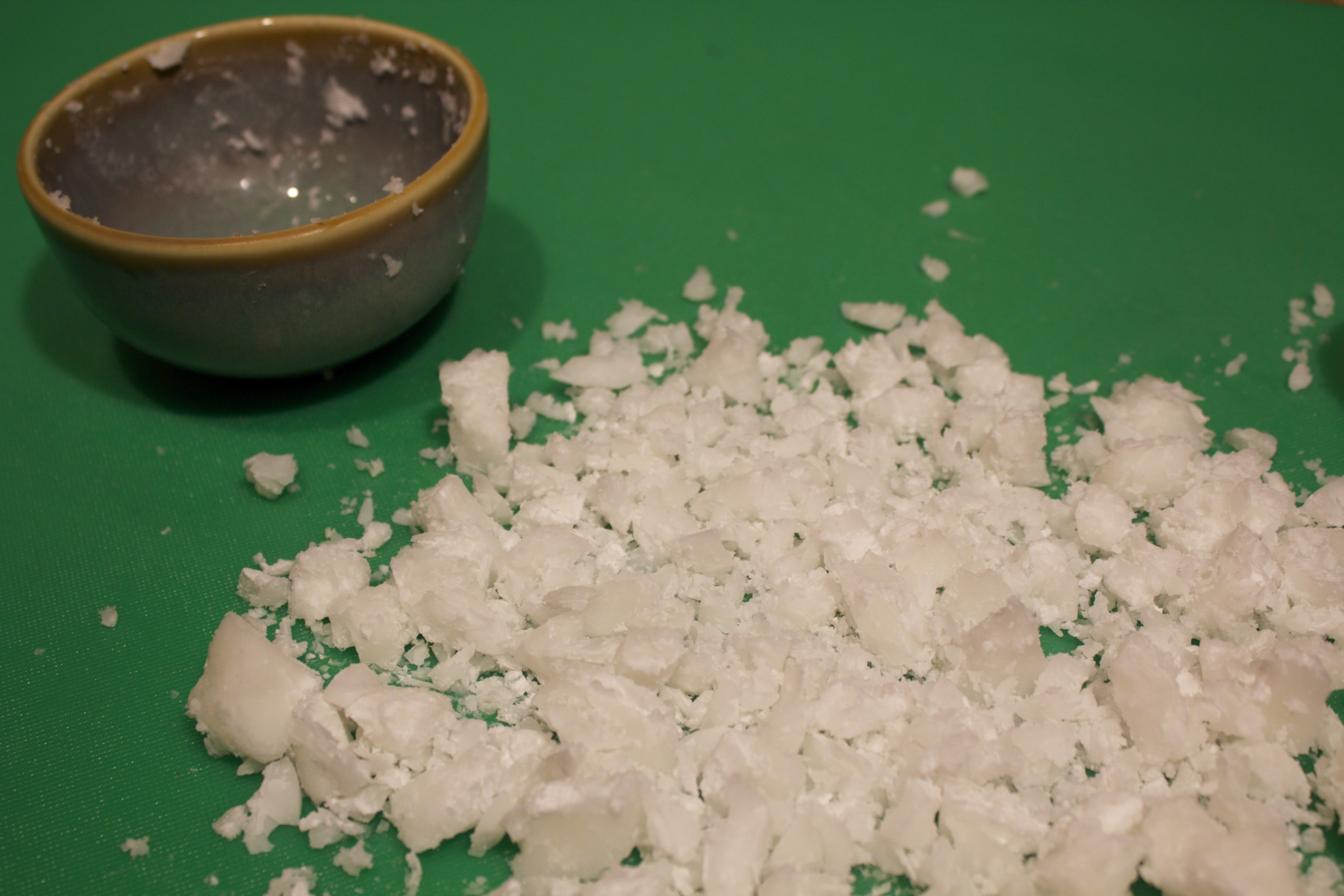
Working with Coconut Oil Young coconuts are large, green, and water-heavy. (Of course, by the time we see them in this country, the outer green shell has been shaved.) As a coconut matures, it becomes wizened, brown and hairy. The gel-like meat within becomes thicker and meatier. Coconut water is the sweet liquid inside the immature coconuts.  Young Coconuts on the Tree Coconut milk is made from the pressed juice of grated coconut meat and water; coconut oil is the fatty oil that comes from the coconut meat.  Oil Comes from the Mature Coconut The oil, which used to have a bad reputation in this country, is now finally getting the attention it deserves for not only being a nutritional powerhouse but for its versatility in the kitchen. I have used coconut oil consistently for 12 years with great results. Coconut oil comes in two varieties: virgin, which has the flavor of a coconut, and an aroma-free filtered variety which is neutral-tasting. 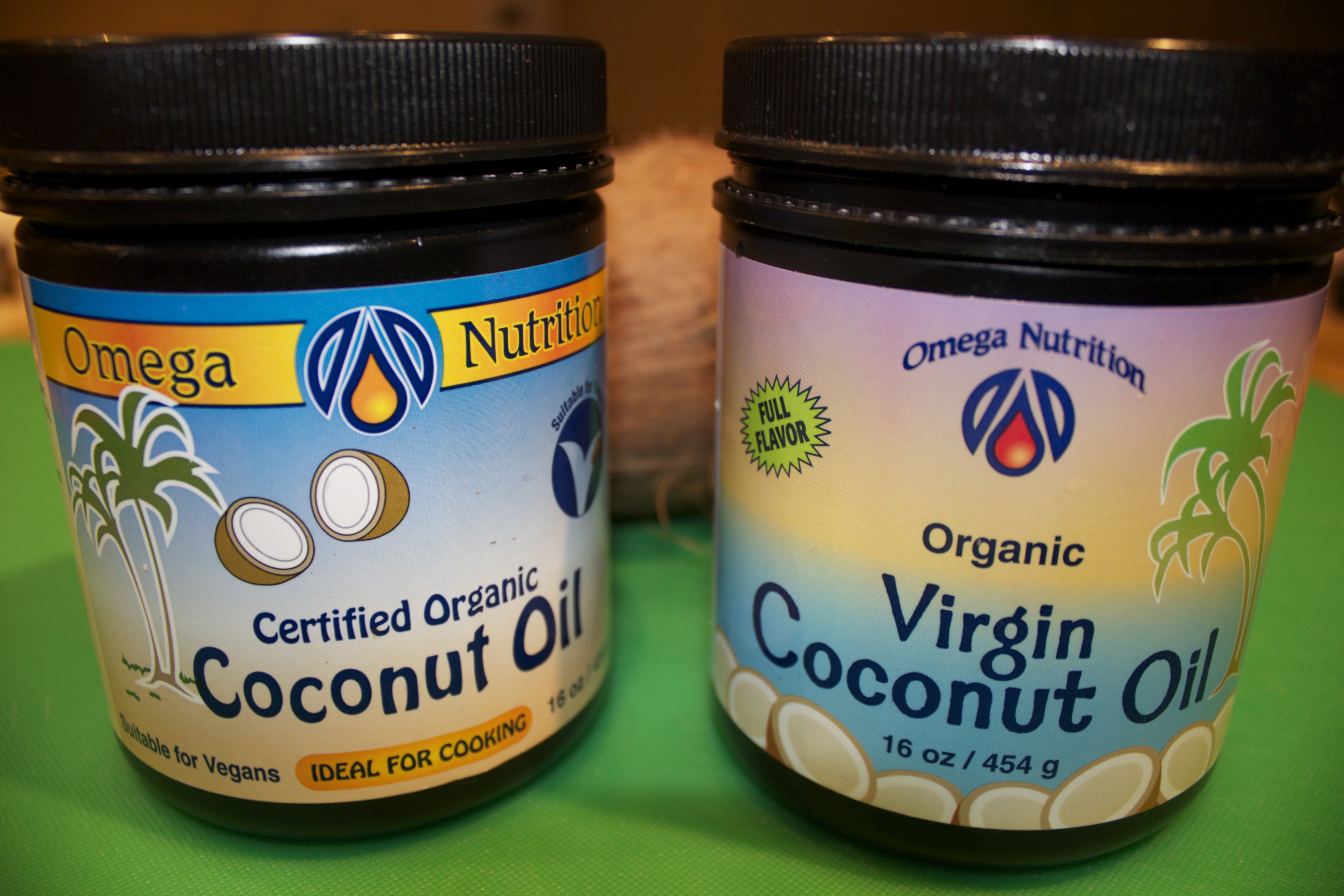 Virgin and Filtered Coconut OIl While I love the virgin coconut oil – and I use it frequently – there are many instances when I don’t want what I’m making to taste like a Thai dish. When I want the perfect oil to cook potato pancakes, for instance, I reach for the filtered aroma-free variety. This product still has all of the nutritional benefits of coconut oil without the predominant coconut flavor, which is removed in a vacuum process. Coconut and the oil come from tropical countries where they are exposed to high tropical temperatures. The oil can take the heat necessary to distill it and remove the coconut flavor without affecting the quality. There’s no trans fat byproducts either, so you don’t have to worry that you’re compromising your health. I love the oil from www.omeganutrition.com. I was first introduced to their products 12 years ago; they have the best filtered coconut oil that I’ve ever tasted; this is the brand that got me hooked . Their other products are of the highest quality as well, so you won’t go wrong with whatever you order. They ship fast; you’ll get your products within just a few days. You can order the oil in all different sizes, from a 1-pound canister to a 7-pound pail (my favorite). You don’t have to worry that the coconut oil will go bad; even after you open the jug, it lasts two years at room temperature! 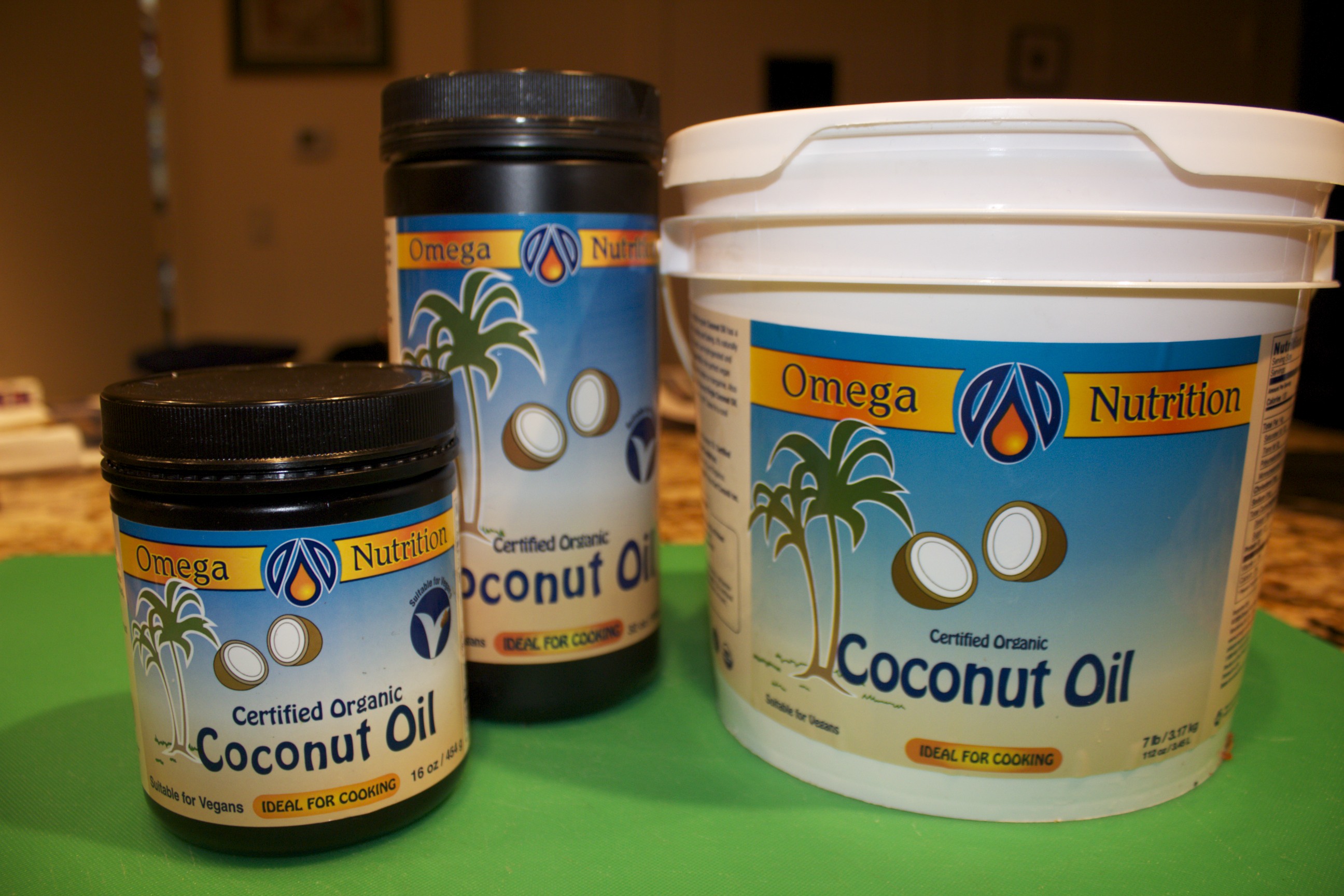 1-pound, 2-pound, and 7-pound Containers At room temperature, coconut oil is semi-solid. It melts at 76 degrees, so if your pantry is warm, you may notice how the consistency changes. Although the oil may have melted, this is not a problem. It can melt and solidify back and forth without damaging the oil in the least. If you’re baking with coconut oil and converting from butter to coconut oil, use 7 tablespoons coconut oil instead of 1 stick butter. Butter contains 20 per cent water, so you need to lessen the oil a bit. The easiest way to measure 7 tablespoons is to scoop ½ cup into a dry measure and then remove 1 tablespoon. 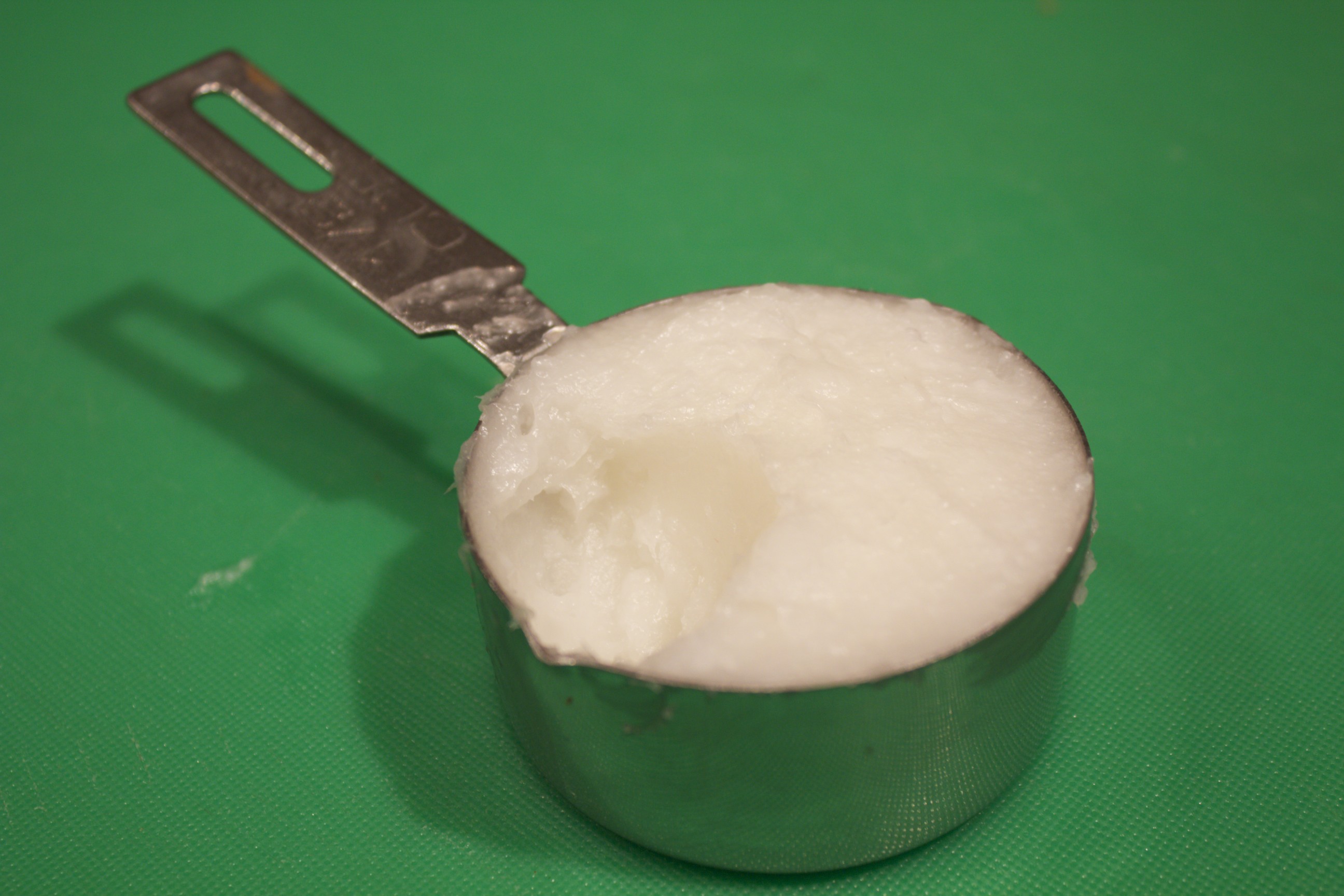 7 Tablespoons Coconut Oil Measure coconut oil in the form that you need it in. For example, say you’re making a cookie and you are going to cream the oil with sugar. You will need the oil in its semi-solid state. Measure it right out of the container. If you need it in liquid form, melt some coconut oil (it only takes a minute or two to melt) in a pan over a low flame, and then measure it. If you want to work coconut oil into a pastry crust and you need it super firm, place a glob in the refrigerator to harden it.  Refrigerator-hardened Coconut Oil Chop the hardened coconut oil first on a cutting board, then place the pieces in measuring cups.
 Measured Oil for a Pastry Crust Pulse the oil into the dry ingredients in a food processor. There’s an easy and delicious coconut oil pastry crust recipe on p. 51 in my book The Healthy Hedonist Holidays. When you need a tablespoon or two to sauté something, it doesn’t matter whether or not the oil is melted or semi-solid. Just scoop some oil out of the container, add it to the skillet, and you’ll find that it will melt quite readily. Be concerned with exactitude only when baking. Furthermore, it’s best to have the other ingredients in your recipe at room temperature before mixing with the coconut oil. In contact with cold ingredients, the oil will start to seize; you’ll then have little clumps of hardened oil in your mix. 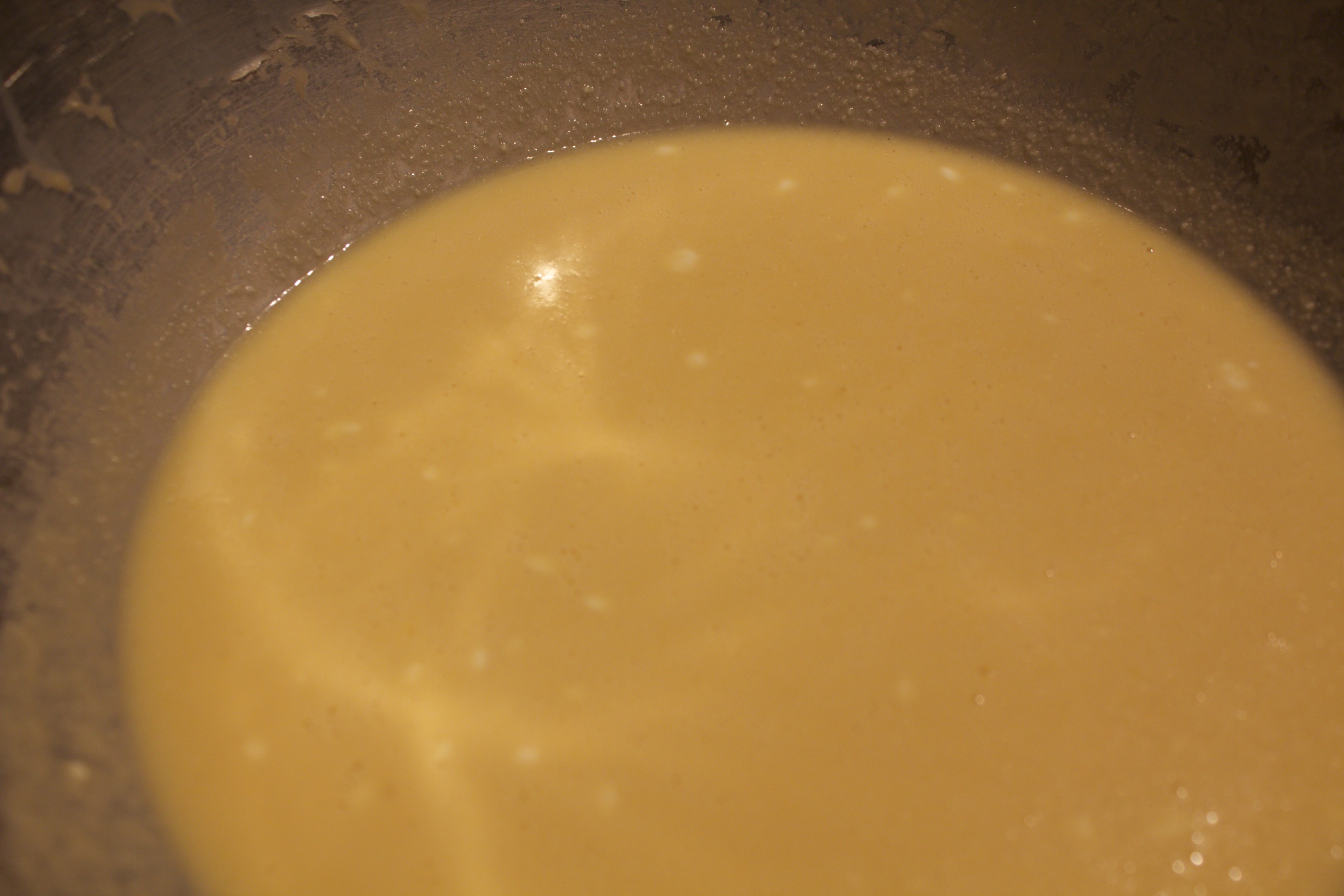 Bits of Coconut Oil Because of Cold Ingredients A quick whirl in the blender will take care of any hardened bits. If your marinade looks like the following picture, just place the pan in the oven. A few seconds in the heat will melt the coconut oil just fine. 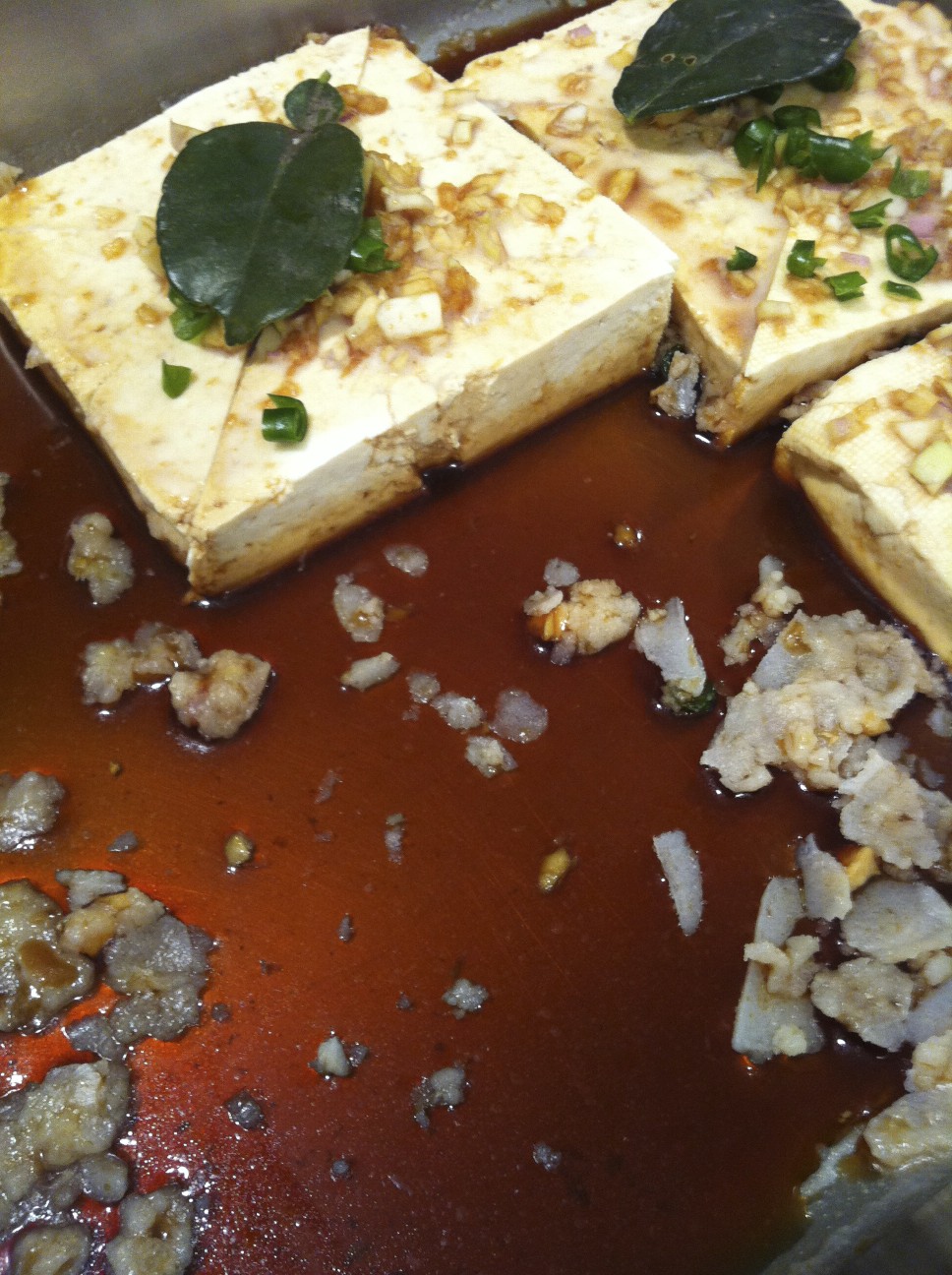 The Ingredients Were Cold You can also place your ingredients over a double boiler, and gently heat the mix. It doesn’t take long for everything to get up to 76˚F, the melting point of coconut oil. Coconut oil has a high smoke point, up to 375˚F, which makes it the ideal oil for frying, and your food won’t taste greasy. (Use the filtered variety when frying.) Hands down this is the best oil for making potato pancakes, cutlets, croquettes, falafel, or any recipe that calls for a substantial amount of oil. 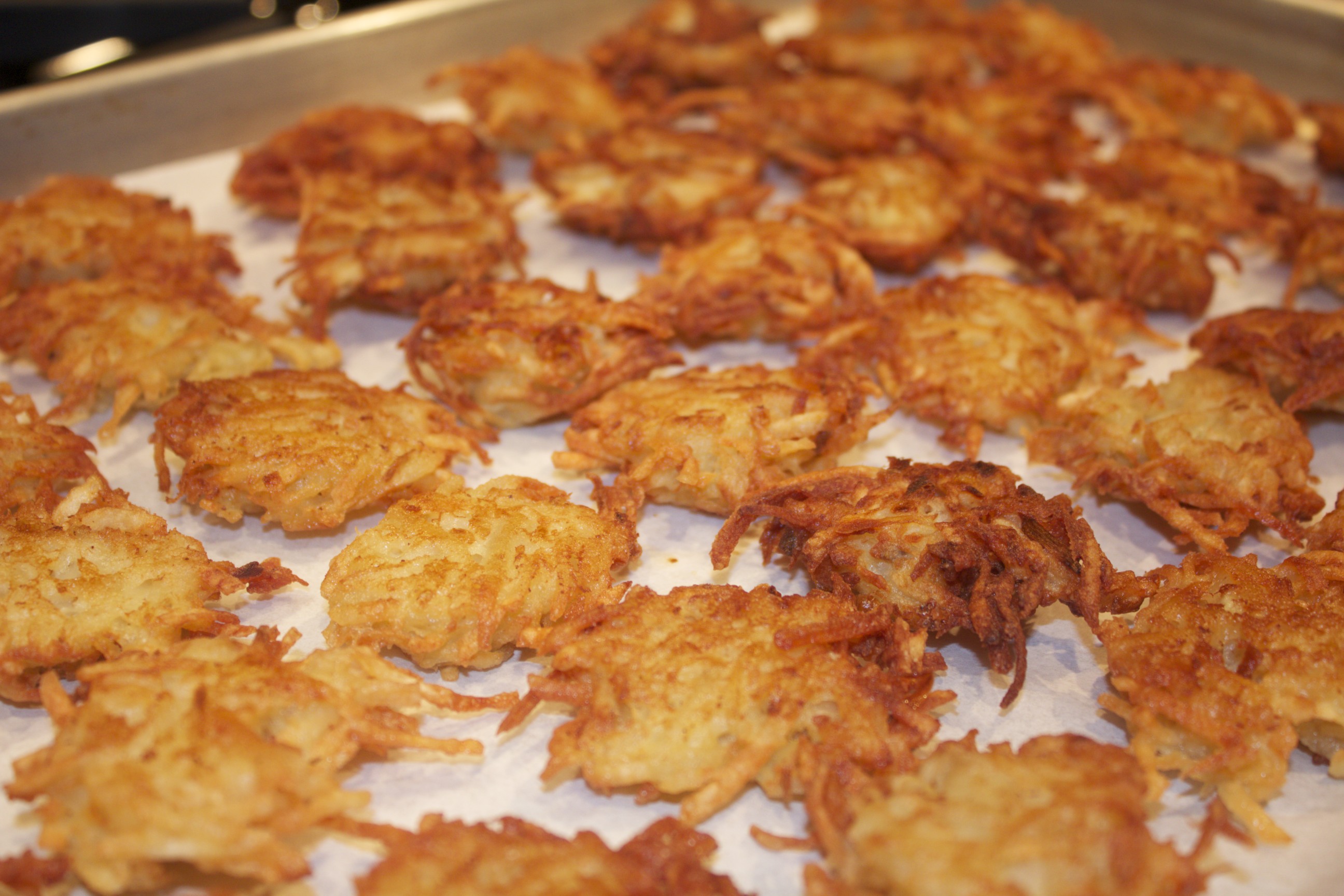 Crispy Miniature Potato Pancakes These are crispy, not greasy. 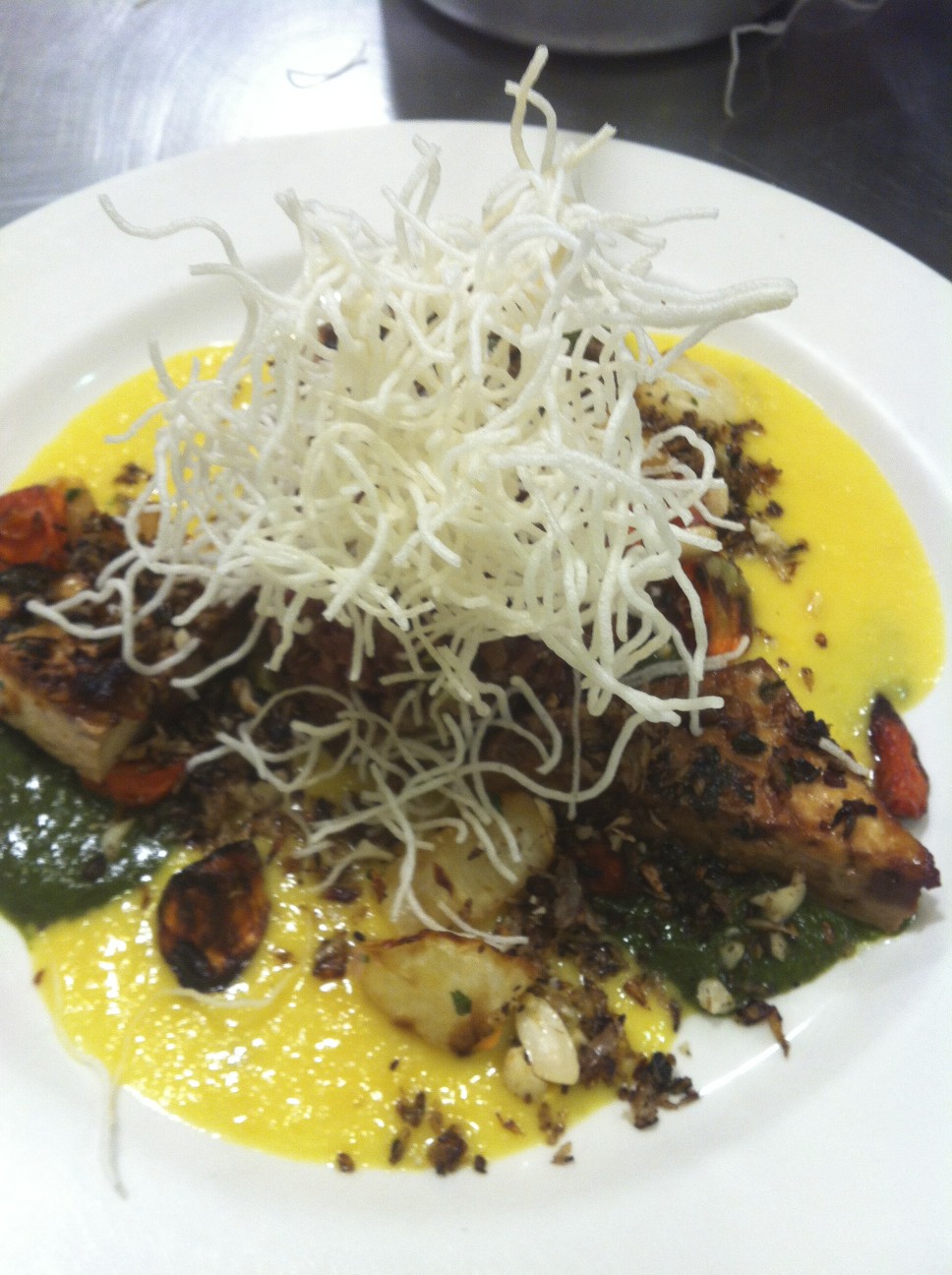 Crispy Rice Noodles Fried in Coconut Oil Since you won’t want to waste this gorgeous oil, just put enough oil to go halfway up the side of whatever you are cooking. That’s enough to cook the first side; flip to finish cooking the other side. The virgin oil is the best choice when you want a hint of tropical flavor. It makes buttery-tasting popcorn, stellar roasted vegetables, and creamy root vegetable purées. One of my favorite vegetable combinations at the moment is puréed parsnips mixed with rutabagas or kohlrabi, enriched with virgin coconut oil and butter. Talk about a creamy, satisfying texture! The virgin oil makes a tasty spread on crackers, bread, muffins, and mocha as well. The flavorful virgin oil is also the better choice if you want to utilize the oil as a supplement to stabilize your blood sugar and keep your metabolism humming at high speed. You can use the virgin variety as a moisturizer for your face and body. Try slathering your entire body with the oil before taking a shower. You’ll come out of the shower clean and soft – not greasy – without having to use soap or moisturizer. You can also work coconut oil into a blend. This combination is inspired by Mary Enig’s blend of oils: mix 1/3 part extra virgin olive oil (or macadamia nut oil for a really subtle flavor), 1/3 part unrefined sesame oil (not the toasted variety), and 1/3 part aroma-free coconut oil. The resulting oil is mild-tasting and has a combination of healthful properties from all three oils. You can keep the oil at room temperature, and use it for sautéing and for salad dressings. It also make s a wonderful oil for mayonnaise. Deviled eggs, anyone? We’ll save that for another day. .
Share on Facebook and Twitter | Coconuts, Fats & Oils, Kitchen Tips, Pantry Items | No comments
|
 Subscribe via RSS Subscribe via RSS |